
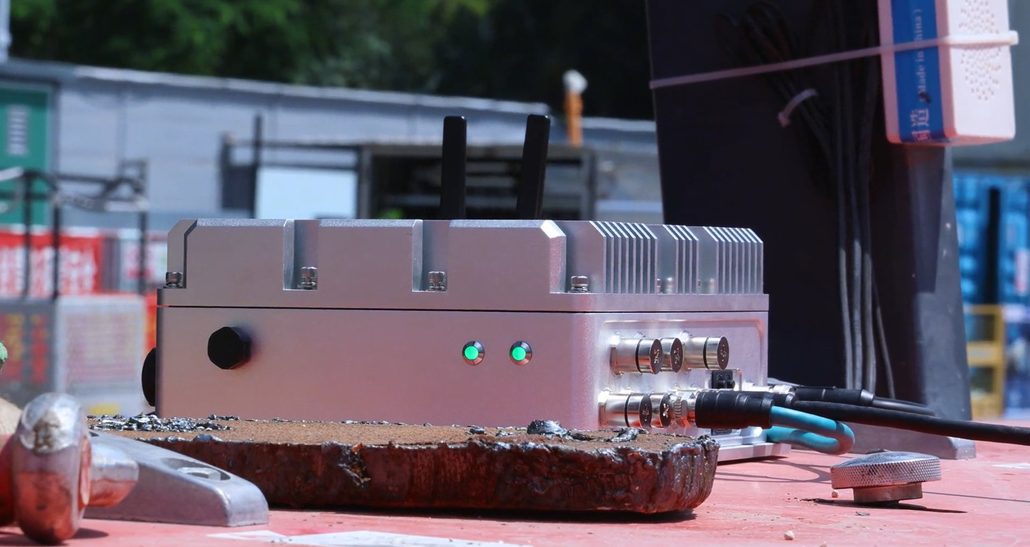
When choosing an industrial Edge AI computer, computational performance is not the only important factor. The environment in which the system will be placed also plays a major role. Dust, rain, water jets, and temperature fluctuations can affect the operation of electronic equipment.
To indicate the protection level of an enclosure, manufacturers use IP ratings such as IP66, IP67, and IP69K. Although these ratings may seem similar, they protect against different conditions. A higher number does not automatically mean that a device is better protected.
In this article, we explain the key differences and discuss what to consider when selecting industrial Edge AI hardware. We use the Seeed Studio reComputer Rugged J4012 as an example.
This article is based on a technical publication from Seeed Studio about IP ratings for industrial Edge AI systems.
What do IP66, IP67, and IP69K mean?
IP stands for Ingress Protection and indicates the degree to which an enclosure protects against the intrusion of solid objects and water. The common two-digit IP code is defined in the IEC 60529 standard.
The first digit describes the protection against solid objects and dust. For all three classifications mentioned, the digit 6 means complete dust-tightness. The difference lies in the protection against water.
| Classification | Protection | Test Conditions |
|---|---|---|
| IP66 | Dust tight and protected against powerful water jets | 100 liters of water per minute from 2.5 to 3 meters distance |
| IP67 | Dust tight and protected against temporary immersion | Immersion under specified conditions, typically 1 meter for 30 minutes |
| IP69K | Dust tight and protected against high-pressure hot water jets | Water at about 80°C at 80 to 100 bar, from 100 to 150 mm distance |
IP66 and IP67 are evaluated according to IEC 60529. The IP69K rating is based on ISO 20653, a standard for electrical equipment in road vehicles.
Why a higher IP rating isn't always better
A common misconception is that a higher IP rating automatically includes all lower protection levels. That is not the case. The ratings are based on different tests.
A device with IP66, for example, is tested for powerful water jets but not automatically for immersion. Conversely, IP67 doesn't mean a device can withstand the powerful water jets from the IP66 test.
IP69K also does not automatically offer protection according to IP67. The IP69K test focuses on high-pressure, high-temperature water jets, while IP67 assesses temporary immersion.
When equipment faces multiple conditions, multiple ratings may be necessary. In such cases, it is important to verify that the manufacturer lists and supports these separately.
An IP rating doesn't tell the whole story
The IP rating is determined during laboratory testing on a new, clean enclosure in a specific configuration. This means the rating does not automatically convey protection against other environmental factors.
Factors like corrosion, vibrations, shocks, temperature resistance, condensation, and aging of seals fall outside the IP rating. Resistance to chemical cleaning agents must also be assessed separately.
In addition, IP66 is not a general guarantee that a device can be cleaned with any high-pressure washer. The IP66 test is conducted with specified water flow, distance, and duration. A high-pressure washer may impose different stresses due to a shorter distance or higher pressure.
The role of connectors and seals
The enclosure itself is not the only factor determining the protection of an industrial system. Cable glands, connectors, and seals are also important.
An IP rating applies to the configuration in which the enclosure was tested. If connections are left open or connectors are not installed according to instructions, protection can be compromised.
For industrial M12 connectors, unused ports must therefore be sealed with the prescribed protective caps. Proper installation and the condition of seals are also essential.
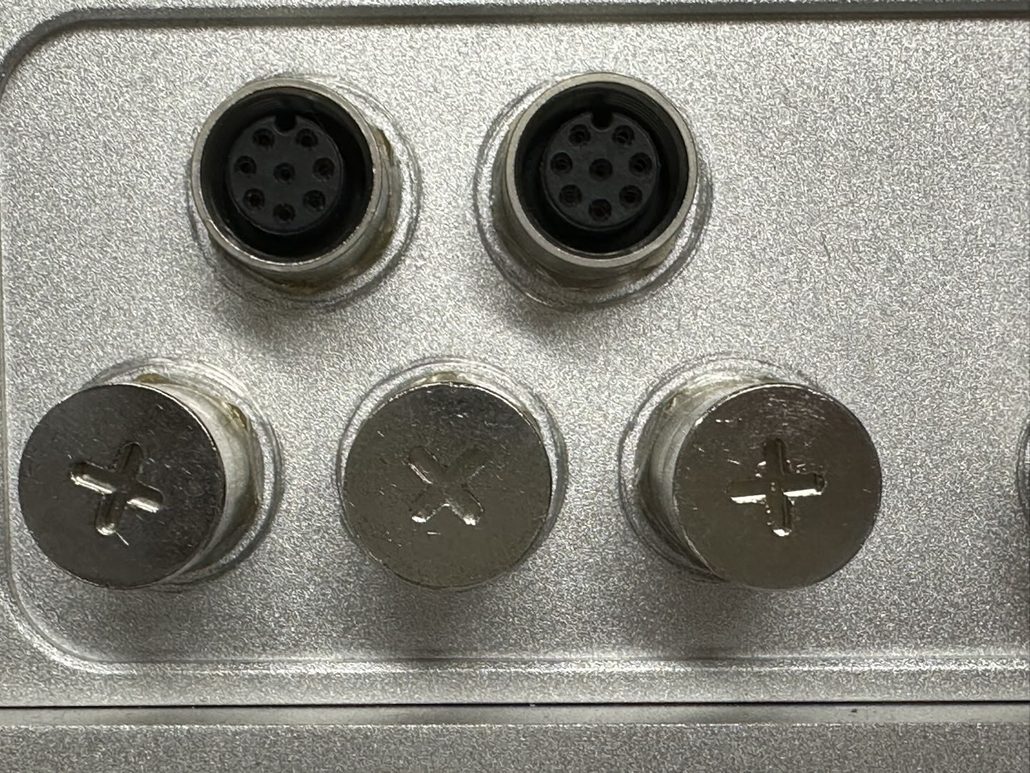
The image shows that the protection of an enclosure also depends on how the connections are used. An open connection is an opening through which moisture or dust can enter.
reComputer Rugged J4012: Edge AI with IP66 protection
An example of an industrial Edge AI computer with IP66 protection is the Seeed Studio reComputer Rugged J4012. This system is based on the NVIDIA Jetson Orin NX 16GB and offers up to 100 TOPS of AI computing performance, according to Seeed Studio.
The J4012 is designed for applications such as outdoor enclosures, mobile machines, AGVs, AMRs, and industrial vehicles. In such environments, dust, rain, water jets, and vibrations may occur, without protection against immersion necessarily being required.
Besides the IP66 enclosure, the system features industrial M12 connectors for Ethernet, CAN, serial communication, I/O, and power.
Seeed Studio also describes a prototype for image processing on an industrial forklift. This uses two PoE cameras and one USB camera for various applications including object tracking and recording camera footage.
This example is a prototype for driver assistance and not a certified functional safety system.
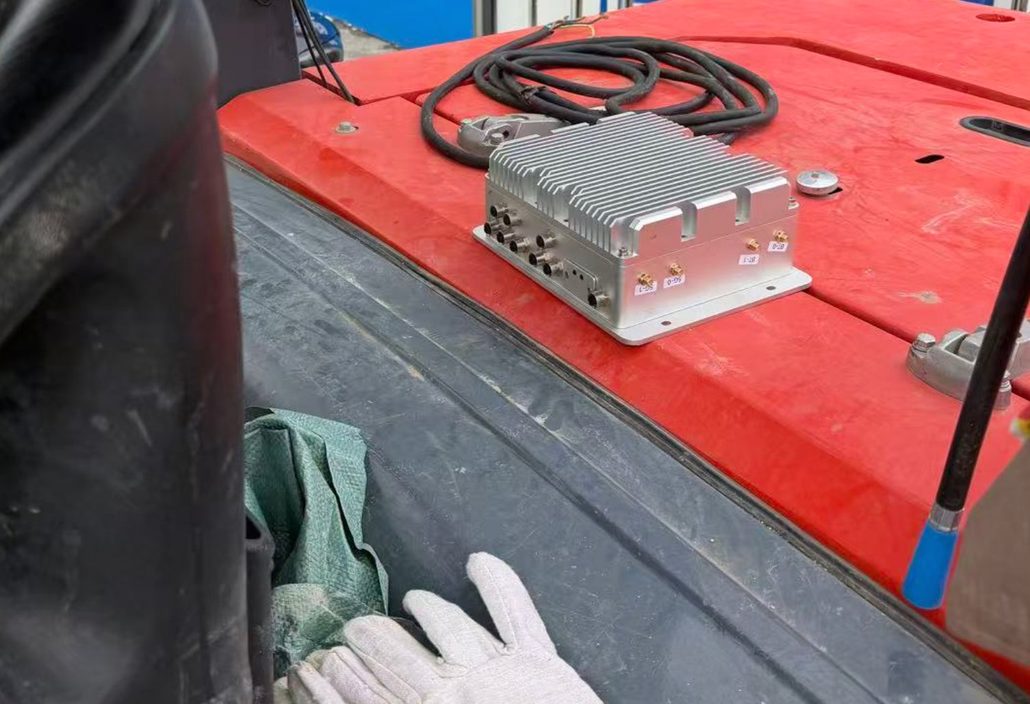
When selecting the J4012, the other specifications are also important. For example, Seeed Studio lists an operating temperature range of -20 to 60°C, but this range applies at an airflow of 0.7 m/s. When installed in a closed enclosure without sufficient airflow, the usable temperature range may be smaller.
The specified vibration resistance of 3 Grms is also a separate specification and is not part of the IP66 rating.
What level of protection does your application need?
The right IP rating depends on conditions at the installation site. When selecting industrial Edge AI hardware, it is therefore wise to answer several questions in advance:
- Is the system exposed to dust, and is complete dust-tightness necessary?
- Could the enclosure be exposed to powerful water jets?
- Is there a risk of temporary or prolonged immersion?
- Will the equipment be cleaned with hot water under high pressure?
Besides these, the used connectors, installation, temperature range, and any vibrations or corrosion risks should also be considered.
By assessing these conditions upfront, you can determine the protection that is truly required. It is important to verify the specified ratings and the manufacturer's associated test conditions.
Conclusion
IP66, IP67, and IP69K provide protection against different forms of water exposure and are not automatically interchangeable. The correct rating is determined by the conditions the equipment will encounter, not by the highest number.
The Seeed Studio reComputer Rugged J4012 demonstrates how industrial Edge AI hardware can be combined with an IP66 enclosure and M12 connectors. For applications involving dust and powerful water jets, this can be a suitable option. When immersion or high-pressure cleaning is also required, it must be separately verified whether the equipment has been tested for these conditions.
Want to learn more about industrial Edge AI? See the reComputer Rugged J4012 at Antratek or discover more about Edge AI and AI single-board computers.


