
Meshtastic & MeshCore
This page is intended for makers, IoT developers, radio amateurs, outdoor users, emergency communication groups, system integrators and technical buyers who want to build a wireless LoRa mesh network with Meshtastic, MeshCore and suitable hardware.
Meshtastic and MeshCore are suitable for projects where devices need to exchange messages, location data or simple data without relying on a cellular network, WiFi or a fixed internet connection. Typical applications include off-grid communication, GPS tracking, outdoor communication, emergency communication, repeater networks, sensor data exchange and extending LoRa mesh coverage in areas with limited infrastructure. At Antratek you will find suitable Meshtastic and MeshCore hardware, including solar nodes, outdoor nodes, trackers, LoRa modules, antennas and accessories for starting and expanding a reliable mesh network.
Choose a subcategory


Meshtastic or MeshCore is suitable when devices need to exchange messages, location data or sensor data without relying on a cellular network, WiFi or a fixed internet connection. Typical examples include outdoor communication, emergency communication, GPS tracking, repeater networks and IoT test setups with LoRa. Meshtastic is widely used for communication in areas where regular networks are unavailable or unreliable. Users can send messages via LoRa, share location data and make nodes part of a self-healing mesh network. MeshCore is interesting for users who want to work with alternative firmware, repeaters or emergency communication networks. For applications that require high bandwidth, real-time video or permanent internet connectivity, a traditional IP network, LTE or WiFi is usually more suitable. In short: choose Meshtastic or MeshCore when you want to exchange messages, location data or simple data without cellular network, WiFi or internet. For off-grid communication, tracking, emergency communication and repeater networks, LoRa mesh is often a practical solution. For a first Meshtastic test you need at least two compatible LoRa nodes, preferably using the same LoRa region and frequency, suitable antennas and the Meshtastic app on a smartphone. For outdoor use, an enclosure, battery or solar power supply and a good mounting position are important. A simple start is possible with ready-to-use Meshtastic hardware. For fixed outdoor installations, solar nodes and outdoor nodes are suitable because they are designed for long-term placement without a fixed power supply. The SenseCAP Solar Node P1 for Meshtastic, for example, combines a XIAO nRF52840 Plus controller with a Wio-SX1262 LoRa module, low power consumption and solar power for extending outdoor network coverage. The device is supplied with Meshtastic firmware and can also be programmed with MeshCore if required. In short: start with at least two compatible LoRa nodes, suitable antennas and the correct region settings. For outdoor use, an enclosure, battery, solar power and a good mounting position are important. Ready-to-use nodes make the first test the fastest. Meshtastic is an open-source communication platform that uses LoRa to create a decentralized mesh network for messages, location data and simple data communication. It is especially popular for outdoor communication, off-grid messaging, GPS tracking and emergency communication using the Meshtastic app. MeshCore is an alternative firmware ecosystem for LoRa mesh communication. It can be useful for applications where repeaters, emergency communication or specific mesh functions are important. Some devices are supplied with Meshtastic firmware, others with MeshCore firmware, and some nodes can be reprogrammed depending on the application. In practice, choose Meshtastic when you want to get started quickly with a widely supported open-source platform and user-friendly app. MeshCore is interesting when you specifically want to work with MeshCore firmware, repeater functions or a particular emergency communication network. In short: Meshtastic is especially suitable for accessible LoRa mesh communication with app support. MeshCore is interesting for specific firmware, repeater and emergency communication applications. The right choice depends on hardware, firmware and intended use. The range of a Meshtastic or MeshCore network depends strongly on antenna, mounting height, environment, obstacles, transmit power and the selected frequency band. In practice, it helps to place nodes higher, use a suitable outdoor antenna and add a repeater or solar node in a strategic location. For outdoor applications, solar nodes and outdoor nodes are often the best choice. The ThinkNode M6 Outdoor Solar Power for Meshtastic, for example, is designed for harsh outdoor environments and industrial applications. This node uses LoRa and Bluetooth, supports long-range communication, has low power consumption and is intended for extending Meshtastic networks, remote monitoring, outdoor emergency situations and network-independent communication. Always test the range in practice, because buildings, trees, terrain and mounting height have a major impact on performance. In short: place nodes high, use a suitable antenna and add a repeater, solar node or outdoor node where needed. Range is mainly determined by antenna, mounting height, obstacles, environment and frequency band. Yes. Meshtastic is specifically intended for communication without central infrastructure. Messages are transmitted via LoRa between the different nodes in the mesh network. A smartphone is usually used for operation via the app, but communication between the nodes does not depend on a cellular network, WiFi or internet. This makes Meshtastic interesting for hiking, camping, events, field work, remote locations and emergency communication. As long as multiple users have a compatible Meshtastic device and the nodes can reach each other directly or via other nodes, messages and location data can be shared through the mesh network. For long-term outdoor use, power supply, weatherproof mounting and antenna placement are important points of attention. In short: yes, Meshtastic works without internet, WiFi or a cellular network. The nodes communicate with each other via LoRa. A phone is mainly used for operation and configuration, not as a central network connection. A tracker is suitable when positioning, mobile use and direct operation are important. The Wio Tracker L1 Pro for MeshCore, for example, is a ready-to-use tracker with OLED display, rechargeable battery, LoRa, nRF52840, L76K GPS and pre-installed MeshCore firmware. This solution is suitable for field use and requires no installation. A solar node or outdoor node is suitable for fixed placement, repeater use or extending outdoor coverage. These nodes are useful when no fixed power supply is available or when the network needs to operate independently for a longer period of time. A separate module or development kit is mainly suitable for prototyping, firmware testing, integration into custom embedded systems or experiments with sensors. Typical applications include projects where you want to define the enclosure, power supply, antenna or firmware configuration yourself. In short: choose a tracker for mobile use and positioning, a solar node or outdoor node for fixed placement and range extension, and a module or development kit for prototyping and custom integrations.Quick answers
Is Meshtastic or MeshCore suitable for my application?
What do I need to start with Meshtastic?
What is the difference between Meshtastic and MeshCore?
How do I increase the range of a LoRa mesh network?
Can I use Meshtastic without internet or a cellular network?
Which hardware should I choose: tracker, solar node or module?
Step 1 Define the goal Choose whether the network is intended for messaging, GPS tracking, emergency communication, sensor data, repeater use or IoT prototyping. Step 2 Choose nodes Start with at least two compatible Meshtastic or MeshCore devices within the same region and frequency. Step 3 Check antenna and power Use a suitable antenna and determine whether battery, USB power or solar power is needed for the application. Step 4 Configure firmware Check whether the device uses Meshtastic or MeshCore firmware and select the correct region settings. Step 5 Connect app or tooling Pair the node with the Meshtastic app or suitable MeshCore tooling and configure name, channel, GPS and repeater functions. Step 6 Test range Test messages, location data and network routing in practice with different distances, heights and obstacles. Step 7 Expand the network Add extra nodes, trackers, outdoor nodes or solar repeaters when more coverage or reliability is required.HowTo: start a Meshtastic or MeshCore network in one day
What customers use Meshtastic and MeshCore for
- Off-grid communication: send messages between users without a cellular network, WiFi or internet.
- Outdoor and events: communication and location information during hiking, camping, scouting, events or field work.
- Emergency communication: set up a local mesh network as a backup when regular infrastructure is unavailable.
- GPS tracking: locate people, groups or mobile nodes with trackers that share position data via LoRa.
- Repeater networks: use solar nodes or outdoor nodes to increase the range of a mesh network.
- Sensor data exchange: exchange sensor data between multiple nodes in a decentralized LoRa network.
- IoT prototyping: quickly test with LoRa modules, microcontrollers, firmware and antennas for embedded applications.
Micro case 1 — Outdoor mesh network without cellular coverage
A group of users wants to send messages and share locations during outdoor activities in an area where cellular coverage is unreliable. With Meshtastic devices over LoRa, a decentralized mesh network is created in which nodes forward messages to each other. By placing a solar node or outdoor node in a favourable position, coverage can be extended without a fixed power supply or internet connection.
Micro case 2 — Emergency communication with MeshCore repeater
An organization wants to set up a local emergency communication network that continues to operate when internet or cellular networks fail. A Meshtastic node can, if required, be programmed with MeshCore and used as a repeater within a local mesh or emergency radio network. This allows messages and location data to be forwarded via multiple LoRa nodes, even in areas with limited infrastructure.
New products
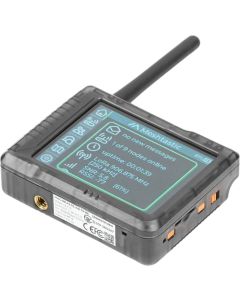


Meshtastic and MeshCore are ideal when you want to build a wireless mesh network with LoRa hardware, low power consumption and long-range communication. On this page you can read in clear language what is possible, which hardware you need as a minimum and how to start your first Meshtastic or MeshCore pilot in one day.
This page has been compiled by Antratek's IoT and embedded team and is updated regularly. Antratek supports customers in selecting Meshtastic and MeshCore hardware, solar nodes, trackers, outdoor nodes, LoRa modules, antennas, batteries and accessories for off-grid communication, emergency communication, tracking and IoT prototyping.